
Markets are assuming that by the second half of 2021, the world will be approaching some type of normalcy, points out Akash Prakash.

Arguing that Pakistan will remain a key player in counter terrorism post-2014, the United States has proposed $280 million in military assistance to the country, although it wants to cut civilian aid in an effort to acknowledge India's concerns about misuse of the funds.

'We can go somewhere between 35 per cent and 40 per cent.'

The loans taken have come down and hence the net capital inflow has reduced.

There will be pressure on the fiscal situation, especially at a time when the monsoon can also disappoint. More populist expenditure is on cards if the mandate is a hung Parliament or a coalition government.

An immediate RBI rate cut will lower lending rates for banks' MSME/retail/mortgage loans before the 'busy' industrial season ends in March.

Rajan addressed a group of investors in Boston on Thursday.

Patel urges government to rein in borrowings, inflation

India lost its competitive advantage as China gave fiscal benefits to its local manufacturers. Besides, recent policy flip-flops have, however, dented India's image as the 'pharmacy of the world'.

In the current fiscal so far, retail inflation stabilised around 5 per cent, while wholesale price-based inflation averaged around 2.9 per cent during April-December.

Among other things, the agenda is likely to focus on increasing private investment, employment generation and giving relief to the farm sector
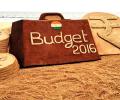
Jaitley described his three priorities as: strengthening India's firewalls by ensuring macroeconomic stability and prudent fiscal management; driving growth through domestic demand; and reforms to boost economic opportunity.
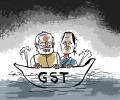
Retaining the GST rate assumes importance since states are under pressure to increase their revenues, hit hard by lockdown. Also, the Centre has not fully compensated states for their revenue losses on account of GST for 2019-20.

Finance Minister Nirmala Sitharaman on Tuesday unveiled a Rs 39.45 lakh crore Budget with a view to fire up the key engines of the economy to sustain a world-beating recovery from the pandemic. This was Sitharaman's fourth Budget. While the taxpayers were left in the lurch, once again, was she able to cheer Corporate India?

Budget has already bombed at the box office and passing it without a revisit will be a mockery of the exercise though any modification may be short lived and perfunctory, observes V Ranganathan.

While most economies contracted in the second quarter of 2020, the Chinese economy grew by 3.2 per cent.

Last year, the US assistance to Pakistan was $534 million.
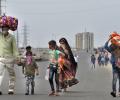
Finance secretary Ajay Bhushan Pandey on Sunday hinted that the government was working on another stimulus package but he refrained from giving a timeframe.
.jpg)
Subbarao also said credible fiscal consolidation is a pre-condition for stabilising inflation and in securing non-inflationary growth.

'The RBI is something like a seat belt. As a driver, the driver being the government, it has the possibility of not putting on a seat belt but of course if you do not put on your seat belt you get into an accident and the accident can be quite severe,' Raghuram Rajan told CNBC TV18. 'The aim of the board is to be Rahul Dravid -- sensible, thoughtful and not, with due respect, Navjot Sidhu,' he added.
"It's a welcome development, but we also feel it was long overdue... It's a recognition of the actions that the government has undertaken like GST, bankruptcy. We also need to keep all these things in perspective," Chief Economic Adviser Arvind Subramanian said.

Finding resources for a fiscal stimulus could be difficult and it could jeopardise macroeconomic stability, says CEA.

Making a case for raising prices of diesel, kerosene and LPG, the Reserve Bank on Tuesday said hike in rates of petroleum products is necessary to arrest fiscal slippages.

The challenges before the coming Budget are more daunting than those in 2021, reveals A K Bhattacharya.

The IMF on Tuesday projected an impressive 12.5 per cent growth rate for India in 2021, stronger than that of China, the only major economy to have a positive growth rate last year during the COVID-19 pandemic. The Washington-based global financial institution, in its annual World Economic Outlook ahead of the annual Spring meeting with the World Bank, said the Indian economy is expected to grow by 6.9 per cent in 2022. Notably in 2020, India's economy contracted by a record eight per cent, the International Monetary Fund (IMF) said as it projected an impressive 12.5 per cent growth rate for the country in 2021.
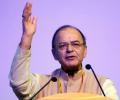
Is the Budget sufficiently prudent? It probably is but at the cost of substantial under-provisioning for the many grand sounding schemes announced in it, says Nitin Desai.

The pre-dawn signals are on the balance negative.

As FY20 Budget fiscal measures need to be better understood, a reversal of the stance back to neutral will allow MPC flexibility to respond to incoming data.
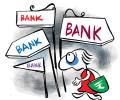
'One way of doing this could be offering credit guarantee to the banks, say 10 per cent, for fresh loans given to micro, small and medium enterprises,' observes Tamal Bandyopadhyay.
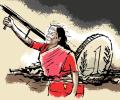
Finance Minister Nirmala Sitharaman will present the much-awaited 2022-23 Union Budget on February 1. While there has been strong recovery in some sectors, touch services like hospitality, tourism and leisure continue to suffer after two Covid-19 waves. Household savings have been hit due to increased spending on health care. Consumption has still not reached pre-pandemic levels.

Many banks' profits will take a hit and a few of them could even end up being in the red because of treasury losses, triggered by a sudden spike in government bond yields in the rising interest rate cycle, notes Tamal Bandyopadhyay.

The Budget would preserve macro-economic stability.

'This solid verdict would further strengthen his resolve to drive forward the economic agenda to ensure that the fruits of the economic momentum continue to reach the poor, so visible during the last five years.'

Listing the series of reforms which led to the upgrade, he said while demonetisation took the economy towards greater formalisation and digitisation, use of Aadhaar ensured targeted delivery of government benefits.
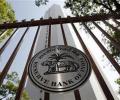
The report said efforts to stabilise the economy through monetary policy interventions need to be complemented by appropriate fiscal policy measures.

Terming investment in infrastructure "quintessential" to boost growth, the Economic Survey on Friday said post unlocking of the economy, infra sectors are poised for growth and construction of roads is expected to return to the high pace attained before COVID-19. The infrastructure sector will be the key to overall economic growth and macroeconomic stability, the Survey said emphasising that the year after the crisis (2021-22) will require sustained and calibrated measures to facilitate the process of economic recovery and enable the economy to get back on its long-term growth trajectory. "Basic infrastructure facilities in the country provide the foundation of growth. In the absence of adequate infrastructure, the economy operates at a suboptimal level and remains distant from its potential and frontier growth trajectory.

India's sovereign credit ratings do not reflect the economy's fundamentals, the Economic Survey said on Friday and nudged the global agencies to become more transparent and less subjective in their ratings. The Economic Survey 2020-21, tabled in Parliament, said that sovereign credit ratings methodology must be amended to reflect economies' ability and willingness to pay their debt obligations, and suggested that developing economies must come together to address this bias and subjectivity inherent in sovereign credit ratings methodology. "Never in the history of sovereign credit ratings has the fifth largest economy in the world been rated as the lowest rung of the investment-grade (BBB-/Baa3). While sovereign credit ratings do not reflect the Indian economy's fundamentals, noisy, opaque and biased credit ratings damage FPI flows," the survey said.

Top gainers in the Sensex pack included Hero MotoCorp, Maruti, M&M, Bajaj Auto, HUL, HCL Tech, Bajaj Finance, ITC, HDFC and L&T, rising up to 7.51 per cent.

The budget-making exercise offers golden opportunities despite challenges, observes Shankar Acharya, former chief economic adviser to the Government of India.
Gross bad loans of banks may rise from 6.9 per cent in September 2021 to 8.1-9.5 per cent by September 2022 if the Omicron variant strikes the economy hard, as per the financial stability report of the Reserve Bank released on Wednesday. The report also said that the rising stress level in the retail loan portfolio of banks -- the mainstay of bank credit for many years now -- was led by home loans, which grew in double-digits so far this fiscal. While asset quality improved, with gross non-performing assets (GNPA) and net NPA (NNPA) ratios declining to 6.9 and 2.3 per cent, respectively, in September 2021, the slippage ratio inched up during the same period as private sector banks showed a higher rate of deterioration in asset quality, as per the report.
